
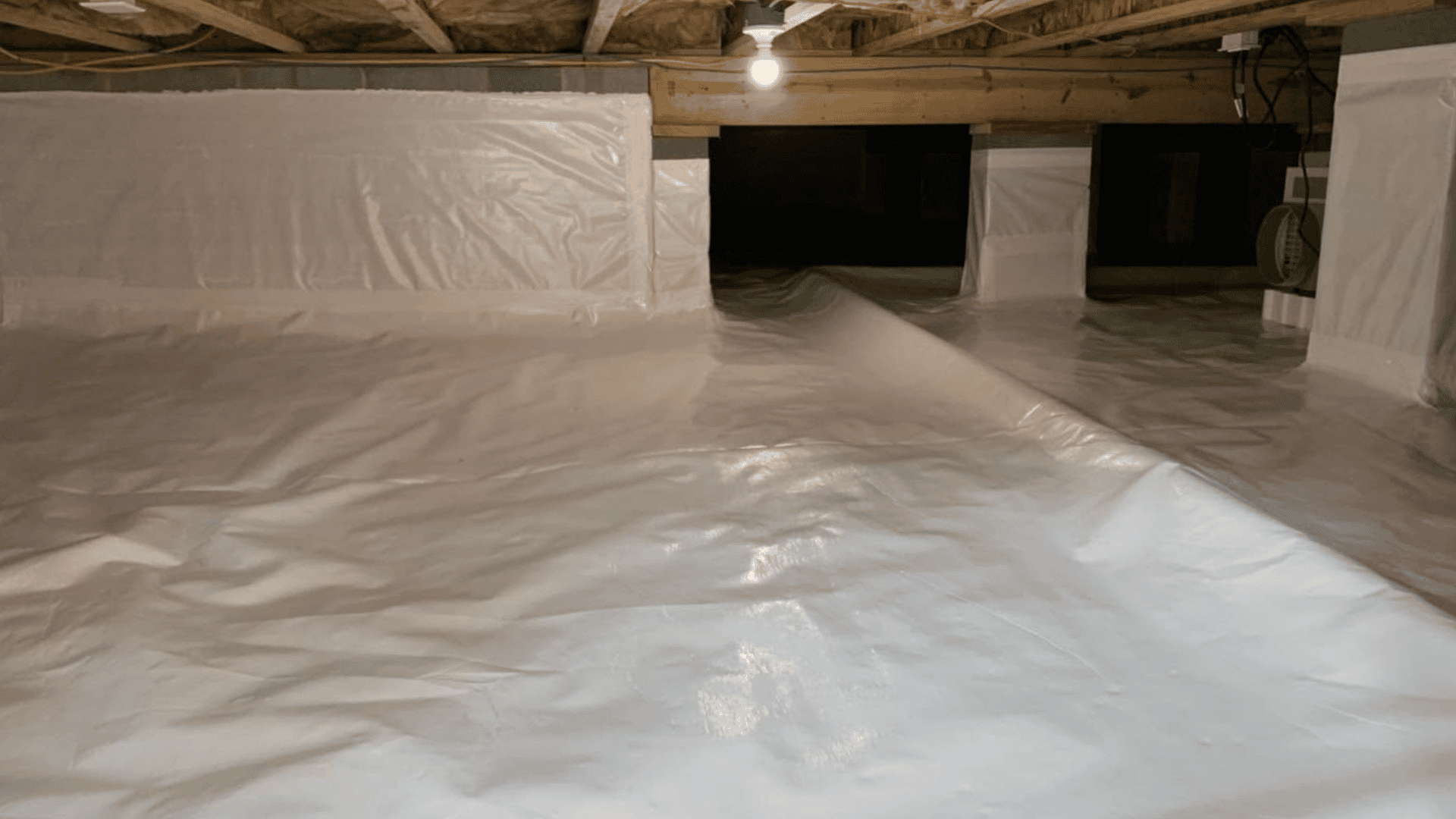
 If your home sits over a vented crawl space, everything happening down there eventually reaches the rooms above it. Damp soil, standing water, and humid summer air lead to wood rot, organic growth, higher power bills, and the moisture-loving pests that follow. Crawl space encapsulation closes that space off and keeps it dry, addressing all of those problems at the source instead of one symptom at a time.
Rid-A-Bug Exterminating has been family owned and operated since 1972, based in Wilkes County just across the river from North Wilkesboro. The crawl spaces we seal sit in the same soil, humidity, and housing stock our technicians have worked in for decades. Call 1-800-682-5901 or reach out through our contact page to schedule an evaluation.
Crawl Spaces Around North Wilkesboro
Homes along the Yadkin River valley and the surrounding foothills face a particular set of conditions. Summer humidity is high, the terrain often sheds water toward foundations rather than away, and much of the local housing stock predates modern moisture management. A vented crawl space built in the 1960s or 1970s assumed outside air would dry the space out. In practice, warm humid air entering a cool crawl space condenses on cold surfaces instead.
The result is a space that stays damp much of the year. Moisture wicks up through bare soil, collects on framing and ductwork, and creates exactly the environment wood-destroying insects and moisture ants seek out. Any homeowner who has opened a crawl space hatch in August and felt that wall of humid air has seen the problem firsthand.
Signs Your Crawl Space Needs Attention
You do not need to crawl the whole space to spot trouble. Watch for:
- Musty odors in the rooms above, especially near floor vents
- Floors that feel cool, springy, or uneven
- Condensation on pipes, ductwork, or floor joists
- Standing water, damp soil, or staining on foundation walls
- Insulation that is sagging, falling, or dark with moisture
- Wood that feels soft or spongy when pressed
- Higher heating and cooling bills without a change in usage
- More moisture ants, crickets, centipedes, silverfish, or roaches showing up indoors
Several of these together usually point to a moisture problem rather than a coincidence.
What Crawl Space Encapsulation Involves
Encapsulation is not just laying plastic on the ground. It is a system separating the crawl space from the ground and the outside air. Our process generally follows these steps:
- Inspection and assessment. We evaluate moisture levels, drainage, existing insulation, framing condition, and any active pest or wood-destroying insect activity, then identify where water is entering.
- Cleanout and repair. Debris, damaged insulation, and standing water come out first, and any wood damage is documented so it can be addressed before the space is closed.
- Waterproofing and drainage correction. We address the sources letting water in so the barrier is not fighting an ongoing intrusion.
- Sealing the space. A durable barrier goes across the floor and up the foundation walls, and vents and gaps are closed so outside air is no longer pulled in.
- Insulation as needed. We install insulation where it belongs in the system, including foundation walls and subfloors. As a certified TAP insulation installer, we can use Thermal, Acoustical, and Pest Control insulation, which controls moisture and organic growth while helping keep pests out.
- Final walkthrough. We review the completed work so you know what was done and what to watch for going forward.
Our encapsulation and waterproofing work covers crawl spaces, subfloors, foundation walls, and attic capping, so the whole envelope can be addressed rather than one isolated spot.
What Encapsulation Does for Your Home
The benefits are practical and they compound:
- Improved energy efficiency. A sealed crawl space stops you from losing conditioned air through the floor. Closing and encapsulating a crawl space can reduce heating and cooling costs by up to 18 percent per year.
- Better indoor air quality. Much of the air in your living space rises from below, so drying out the crawl space means fewer musty odors, fewer allergens, and easier breathing.
- Fewer conditions that attract pests. Damp spaces draw termites, moisture ants, roaches, crickets, centipedes, and rodents. Removing the moisture removes the invitation.
- Reduced organic growth and wood rot. Mold, mildew, and rot all require moisture, and a dry space is not conducive to any of them.
- Protection for your structure. Framing, subfloors, and joists last longer when they are not cycling through wet and dry seasons.
- More comfortable floors. Homeowners often notice the floor temperature difference first, particularly in winter.
Encapsulation Is Pest Control
This is why a pest management company handles this work rather than a general contractor. Moisture is the most reliable predictor of a pest problem in a home with a crawl space. Subterranean termites need it, and so do moisture ants, wood-destroying beetles, camel crickets, and roaches. Rodents nest in damp fallen insulation, and snakes follow the rodents.
Sealing and drying a crawl space is a long-term solution for keeping pests out, not just a comfort upgrade. Our technicians are state-registered for both pest management and wood-destroying insects, so the person assessing your crawl space recognizes termite damage, moisture ant galleries, and rodent harborage while they are down there.
Why Homeowners Here Work With Rid-A-Bug
- Family owned and operated since 1972, based in Wilkes County
- More than 45 pest management professionals on staff
- Licensed and insured in North Carolina, South Carolina, and Virginia
- All technicians state-registered for pest management and wood-destroying insects
- Licensed, certified, and registered with the North Carolina Department of Agriculture
- QualityPro certified through the National Pest Management Association, and WDIR accredited inspectors through the North Carolina Pest Management Association
- Certified TAP insulation installer, with LEED certified treatments available
- Same-day service in most cases, or within 24 hours, plus weekend and evening appointments
- Warranties available, and a 10 percent discount for military members and senior citizens
Related Services You May Need
Crawl space work often surfaces other issues, and we can handle them without bringing in a second company:
- Termite management. If we find subterranean termite activity, we can inspect and treat it.
- Pest and insect management. For the ants, roaches, crickets, spiders, and rodents attracted by moisture.
- Wildlife management. For larger animals in the crawl space, handled humanely by our NC Wildlife Damage Control Agent.
- Wood-Destroying Insect Reports. Required by law when a property is sold or refinanced, completed by our accredited inspectors.
- Insulation services. TAP insulation for attics and crawl spaces, delivering pest control and energy benefits together.
Frequently Asked Questions
How long does crawl space encapsulation take?
It depends on the size of the space, how much cleanout and repair is needed, and whether drainage work is required. Some projects finish in a day or two, others take longer. We give you a realistic timeline after the inspection.
Will encapsulation fix a wet crawl space by itself?
Not if water is actively entering. A vapor barrier controls moisture coming up from soil and humid air, but it is not a dam. Standing water and drainage problems have to be corrected first, which is why waterproofing is part of our process rather than an add-on.
Do I still need pest control after encapsulation?
Encapsulation removes the conditions that attract many pests, which is a major step, but it does not make a home pest-proof on its own since pests also enter at the roofline, doors, and utility penetrations. Many homeowners pair it with ongoing pest management.
Should I encapsulate before selling my home?
Many sellers do, because moisture damage and wood-destroying insect activity show up on inspection reports and in the Wood-Destroying Insect Report required at sale. Addressing it in advance is usually easier than negotiating over it during closing. Sealing a space also does not cause mold, since mold needs the moisture that encapsulation removes.
How much does encapsulation cost?
Pricing depends on square footage, moisture conditions, drainage needs, and the amount of repair and insulation work involved. Contact us through our contact page or call 1-800-682-5901 and we will provide an estimate after evaluating your crawl space.
Schedule Your Crawl Space Evaluation
A crawl space is easy to ignore right up until the floors feel wrong, the power bill climbs, or a Wood-Destroying Insect Report turns up something you did not expect. Getting it evaluated is straightforward, and knowing where you stand is worth the visit either way.
Rid-A-Bug has been showing up for families across the Carolinas and Virginia since 1972, and our crew works out of Wilkes County every day. Call 1-800-682-5901 or reach out through our contact page to schedule your inspection.