
Snake Awareness
Snakes play important roles in local ecosystems by controlling rodent and insect populations. However, their presence near homes creates legitimate concerns, especially for families with young children or pets. Some North Carolina snake species are venomous, including copperheads, cottonmouths, and rattlesnakes, making snake detection an important safety consideration.
Recognizing snake signs early allows you to implement snake prevention strategies before snakes establish habitats too close to your living spaces. Whether you're dealing with harmless black rat snakes or potentially dangerous copperheads, identifying their presence helps you make informed decisions about managing your property and when to seek professional wildlife management assistance.
Understanding Snake Behavior
Before exploring specific snake signs, understanding basic snake behavior helps you know where and when to look for evidence of their presence. Snakes are ectothermic, meaning they rely on external heat sources to regulate body temperature. This biological characteristic significantly influences their activity patterns and habitat preferences.
During warmer months, snakes actively hunt, mate, and move throughout their territories. They seek areas with abundant prey, suitable shelter, and appropriate basking sites. As temperatures cool, snakes become less active and seek protected locations for brumation during winter.
Snakes prefer environments offering:
- Abundant prey populations, particularly rodents and insects
- Protected hiding spots such as rock piles, woodpiles, or dense vegetation
- Water sources for drinking and hunting amphibians
- Sunny areas for thermoregulation
- Cool, shaded retreats during hot weather
Understanding these preferences helps you recognize why certain areas of your property might attract snakes and where to look for snake signs.
Read our blog about how to identify venomous snakes.
1. Snake Shed Skin
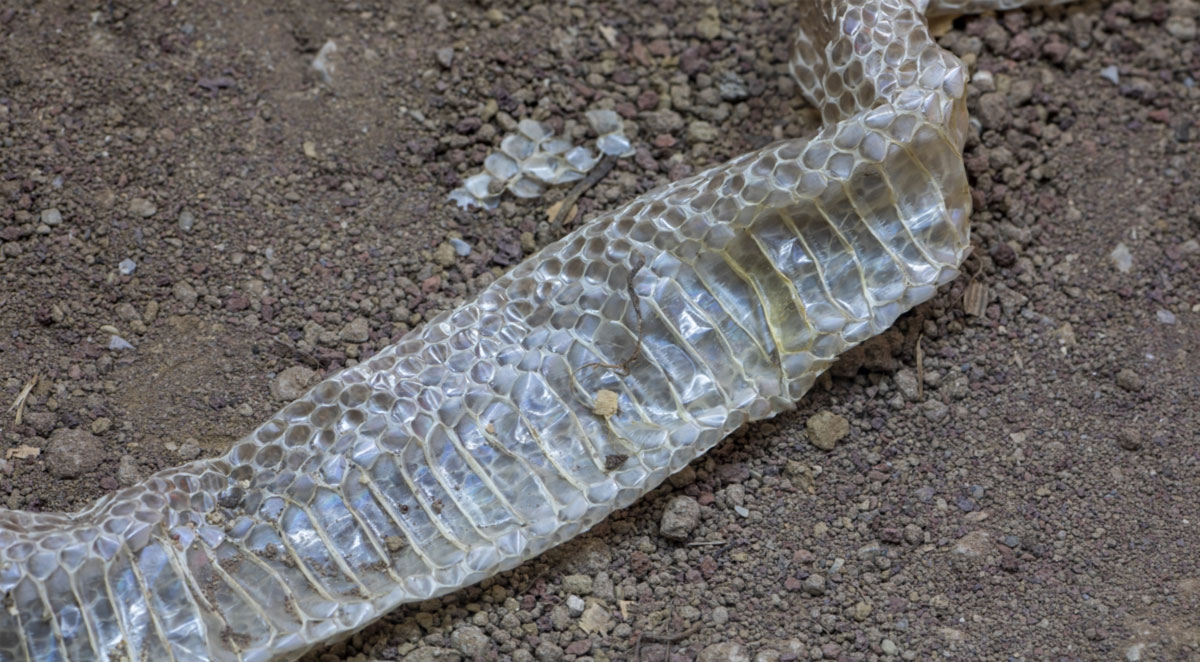
One of the most obvious and recognizable snake signs is shed skin. Snakes periodically shed their entire outer layer of skin as they grow. Young, rapidly growing snakes may shed every few weeks, while adult snakes typically shed several times per year.
Snake shed skin appears as a translucent, papery layer that often retains the general shape and scale pattern of the snake that left it. You might find shed skin in various locations around your property:
- Along foundation walls where snakes travel
- Near rock piles or woodpiles providing shelter
- In crawl spaces or basements where snakes seek cool, protected areas
- Around garden areas with dense vegetation
- Near water features or damp locations
Fresh shed skin appears moist and pliable, while older sheds become dry, brittle, and fragmented. Finding shed skin definitively confirms snake presence in the immediate area, as snakes don't travel far from their established territories.
If you discover shed skin, examine your property for other snake signs and consider implementing snake prevention measures to make your yard less attractive to these reptiles.
2. Snake Tracks
While snakes don't leave footprints, they do create distinctive tracks in certain conditions. Snake tracks appear as continuous lines or trails showing their characteristic side-to-side movement pattern. You're most likely to observe snake tracks in:
- Fine dust or dirt along pathways
- Sandy soil in garden areas
- Mud near water sources
- Dusty areas in attics, basements, or crawl spaces
Snake tracks typically show a winding, S-shaped pattern reflecting their serpentine movement. The width of the track indicates the snake's size, while the pattern's regularity can suggest the species.
Looking for tracks works best in dusty or sandy areas with minimal disturbance. Morning inspections often reveal overnight snake activity, as tracks remain visible until wind, rain, or other animals disturb them.
Read our blog about how to make your home unfriendly for snakes.
3. Snake Holes and Burrows
While snakes don't dig their own burrows, they readily occupy holes created by other animals or formed naturally in the landscape. Snake holes typically range from one to several inches in diameter, depending on the snake species using them.
Common locations for snake holes include:
- Areas near foundation walls
- Beneath concrete slabs, porches, or decks
- Around tree roots and stumps
- In rock walls or retaining walls
- Near garden areas with loose soil
- Around compost piles or mulched areas
Unlike rodent burrows that often show excavated dirt piled at the entrance, snake holes appear clean since snakes don't dig them. You might notice smooth, worn edges around frequently used holes. Snake holes sometimes show subtle tracks or disturbances in surrounding dirt, and you may find shed skin nearby.
Snakes use these burrows for shelter from temperature extremes, protection from predators, and secure locations for brumation during winter months. If you discover potential snake holes on your property, observe them from a safe distance. Never reach into holes or try to determine what's inside.
4. Unusual Pet Behavior
Pets, particularly dogs and cats, often detect snakes before humans notice them. Animals possess keen senses of smell and hearing that alert them to snake presence even when the reptile remains hidden.
Watch for these behavioral changes in your pets:
- Intense focus on specific spots in your yard
- Persistent barking, growling, or hissing at particular locations
- Reluctance to enter certain areas they normally frequent
- Pawing at or investigating specific spots along fence lines or foundation walls
- Heightened alertness or anxiety in previously comfortable areas
- Sudden retreat from areas they were approaching
Dogs may point, stance, or circle areas where snakes are hiding. Cats often stare intently at locations where snakes are concealed or exhibit their hunting crouch position.
If your pet shows unusual interest in a specific area, investigate carefully from a safe distance. Don't allow pets to approach or interact with snakes, as even non-venomous species may bite defensively, and venomous snakes pose serious risks.
5. Disappearing Rodent Populations
A sudden decline in rodent activity around your property might indicate snake presence. Snakes are effective predators that primarily feed on small mammals, making them excellent natural rodent controllers.
Signs that snakes might be controlling rodent populations include:
- Decreased rodent droppings in sheds, garages, or outbuildings
- Fewer rodent sounds like scratching or scurrying at night
- Reduced damage to stored items or animal feed
- Less frequent rodent sightings in areas that previously had activity
- Bird feeders experiencing less rodent visitation
While natural predation cycles or seasonal changes might explain reduced rodent activity, consistent patterns combined with other snake signs suggest snake presence. Effective snake prevention requires eliminating rodent attractants while making your property less hospitable for both rodents and the snakes that hunt them.
6. Snake Droppings and Musk
Snake droppings, while less commonly encountered than some other snake signs, provide definitive evidence of snake presence.
Snake droppings typically display these characteristics:
- Dark brown or black coloration
- Semi-liquid or paste-like consistency
- White or yellowish cap at one end (uric acid)
- Strong, unpleasant odor
- May contain hair, bones, or scales from prey
You might find snake droppings near areas where snakes regularly rest or along their travel routes. Common locations include along foundation walls, near entry points to crawl spaces, around rock or wood piles, and in protected outdoor areas.
Additionally, snakes produce musk—a foul-smelling defensive secretion released when threatened. This distinctive odor resembles a combination of rotting garbage and skunk spray. If you notice this smell without obvious sources, snakes may be present nearby.
7. Actual Snake Sightings
The most obvious snake sign is seeing a snake on your property. Snakes often blend remarkably well with their surroundings, particularly species with patterns matching local vegetation or soil.
Common locations for snake sightings include:
- Basking on warm surfaces like driveways, patios, or rocks
- Crossing paths or driveways during active hunting periods
- Near water features, bird baths, or ponds
- Around foundations, especially near gaps or entry points
- In garden areas with dense vegetation providing cover
- Near woodpiles, brush piles, or stone walls
- Around outbuildings, sheds, or garages
Most snake sightings occur during warmer parts of the day in spring and fall, while summer activity shifts to cooler morning and evening hours.
If you encounter a snake, maintain a safe distance of at least six feet. Most snake bites occur when people attempt to handle, capture, or kill snakes. Never attempt to identify a snake by getting close enough to examine its features—observe from a distance and contact a professional wildlife management service if you need assistance.
Implementing Snake Prevention Strategies
Recognizing snake signs represents just the first step in managing snake presence around your home. Effective snake prevention requires modifying your property to make it less attractive to these reptiles.
Yard Maintenance for Snake Control
Proper yard maintenance significantly reduces snake habitat and attractiveness:
- Keep grass mowed short: Snakes avoid open areas where they're exposed to predators. Maintaining grass at three inches or shorter eliminates hiding spots.
- Remove debris and clutter: Eliminate brush piles, leaf accumulations, fallen branches, and other debris providing snake shelter.
- Manage woodpiles properly: Store firewood at least 20 feet from your home, elevated off the ground on racks, and stacked neatly to minimize gaps.
- Trim vegetation: Keep shrubs and bushes trimmed away from your home's foundation and remove dense groundcover near buildings.
- Eliminate rock piles: Remove decorative rock piles or secure them to eliminate gaps where snakes can hide.
Removing Snake Attractants
Making your property less attractive to snake prey reduces the likelihood of snake presence:
- Control rodent populations: Eliminate food sources attracting rodents, seal entry points to buildings, and address existing rodent infestations.
- Manage bird feeders carefully: Place feeders away from your home and clean up spilled seed that attracts rodents.
- Address moisture issues: Fix leaking outdoor faucets, improve drainage in low areas, and eliminate standing water.
- Reduce insect populations: Minimize outdoor lighting attracting insects that draw insect-eating prey species.
Structural Modifications
Physical modifications to your property can prevent snake access to buildings:
- Seal cracks and gaps in foundations, walls, and around utility penetrations
- Install door sweeps on all exterior doors
- Screen crawl space vents with quarter-inch or smaller hardware cloth
- Repair damaged siding, soffit, and fascia
- Fill gaps around pipes and wires entering structures
When to Seek Professional Help
While many homeowners successfully implement snake prevention strategies independently, certain situations warrant professional wildlife management assistance:
- Frequent snake sightings near your home
- Discovery of venomous snake species on your property
- Snakes entering your home or other buildings
- Large snake populations making outdoor activities uncomfortable
- Inability to identify whether encountered snakes are venomous
Rid-A-Bug specializes in humane wildlife removal, including snake management. Our North Carolina Wildlife Damage Control Agent safely removes snakes and implements exclusion measures preventing their return. We identify factors attracting snakes to your property and provide recommendations for long-term prevention.
Frequently Asked Questions
What time of year are snakes most active?
Snakes are most active during warm months from spring through fall. Peak activity occurs when temperatures range between 70-90°F. In North Carolina, you'll typically see increased snake activity from April through October, with reduced activity during hot summer middays. During winter, snakes enter brumation and remain largely inactive.
Are all snakes dangerous?
No, most North Carolina snake species are non-venomous and pose no serious threat to humans. Of approximately 37 snake species in the state, only six are venomous: copperheads, cottonmouths, timber rattlesnakes, eastern diamondback rattlesnakes, pigmy rattlesnakes, and eastern coral snakes. Even venomous snakes prefer to avoid humans and typically only bite when threatened.
How can I tell if a snake is venomous?
Venomous snakes in North Carolina (except coral snakes) share certain characteristics including triangular heads, vertical pupils, and heat-sensing pits between eyes and nostrils. However, identifying snakes requires expertise and close examination that puts you at risk. If you're uncertain about a snake's identity, treat it as potentially venomous and maintain safe distance while contacting a wildlife professional.
Living Safely With Snakes
Most North Carolina snakes are non-venomous and beneficial for controlling pest populations. Learning to recognize snake signs helps you stay aware of their presence while implementing appropriate prevention strategies. By maintaining your property properly, eliminating attractants, and seeking professional assistance when needed, you can minimize unwanted snake encounters while respecting these important members of local ecosystems.
If you've noticed snake signs around your property or need assistance with snake management, please contact us.